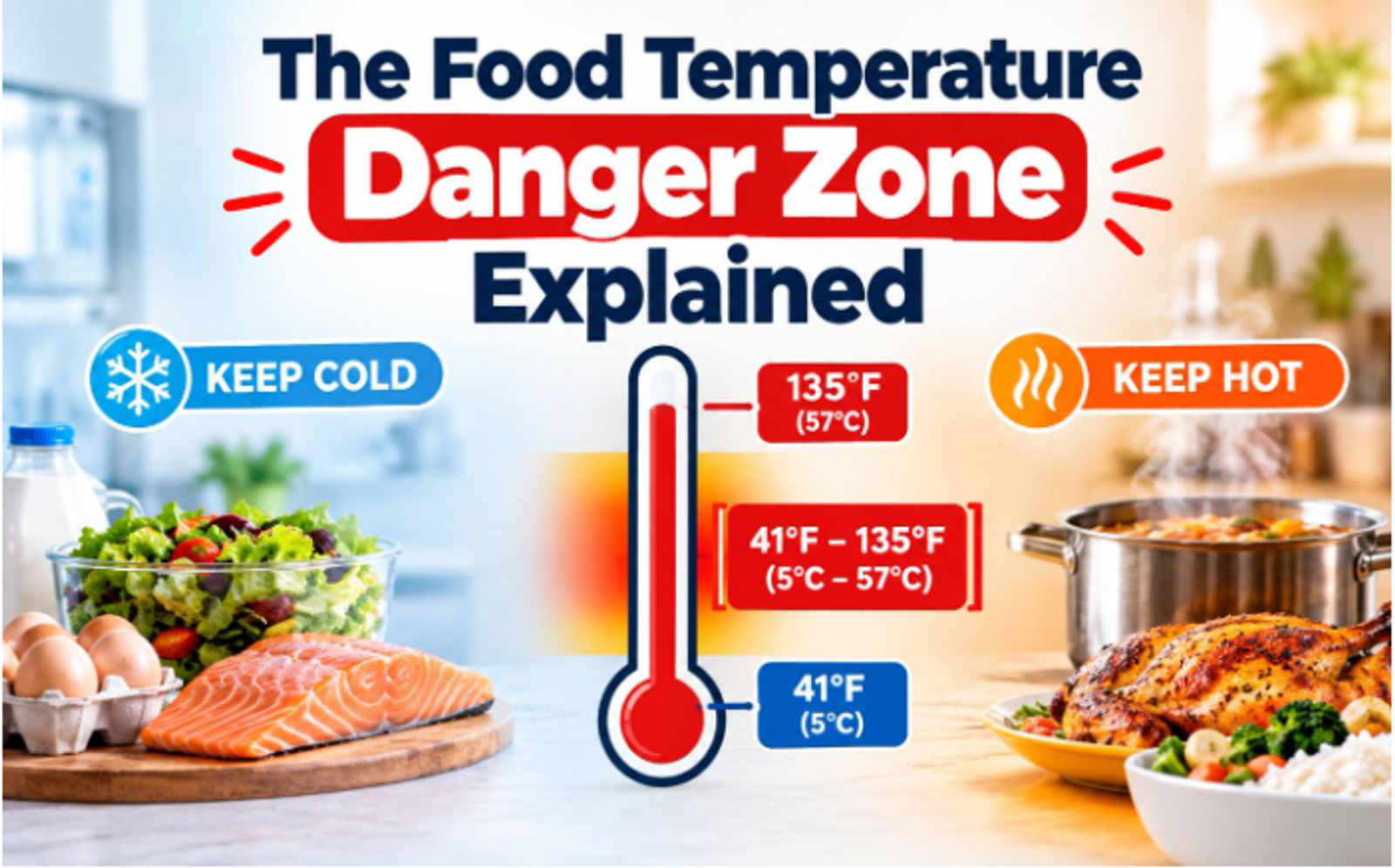
The food temperature danger zone is the temperature zone in which harmful bacteria can grow rapidly. The FDA Food Code identifies temperatures between 41°F to 135°F (5°C to 57°C) as the temperature danger zone for time/temperature control for Safety (TCS) foods. TCS food within this range during long periods of time bacteria can grow more rapidly increasing the risk of food borne illness. The basic guidelines are: Keep cold food cold; keep hot food hot; and minimize the time food is held at unsafe temperatures. Understanding the food temperature danger zone allows employees to know when to refrigerate food, when to use hot-holding equipment, how to cool cooked food and when to throw away food that has been in the danger zone for too long.
What Is the Food Temperature Danger Zone?
The food temperature danger zone is the temperature range in which bacteria can multiply rapidly to constitute a food-safety concern. Food service operations that follow the FDA Food code requires TCS food cold holding at 41°F or below, or hot holding at 135°F or above. The USDA and CDC consumer guidance may refer to the danger zone as 40°F to 140°F. These agencies explain safe food handling at home.
Food Temperature Danger Zone at a Glance
Food safety situation
Temperature
Cold holding in food service
41°F or below
Common consumer cold-safety guidance
40°F or below
Danger zone commonly used in consumer guidance
40°F–140°F
Food-service danger zone for TCS food
41°F–135°F
Hot holding in food service
135°F or above
Common consumer hot-safety guidance
140°F or above
Confusion may arise in the difference in temperatures ranges between 40°F to 140°F and 41°F to 135°F. The 41°F to 135°F is the range used by the FDA Food Code for food service operations, while the 40°F to 140°F temperature range is for food safety guidelines for food prepared and stored at home. Perishable food should never be left between these ranges as it's the perfect environment for bacteria to grow. All food handlers working in food service operations need to abide by the food code and beware of the temperature danger zone of 41°F to 135°F.
Why Is the Temperature Danger Zone Dangerous?
Temperature is a key component for bacteria to grow and multiply. If food is maintained in an unsafe temperature zone it is the perfect environment for bacteria to multiply. According to the USDA some bacteria can multiply every 2 minutes under the appropriate conditions.
Listed below are foods which can support the rapid growth of bacteria if they are kept at temperature danger zones:
- Meat and poultry
- Seafood
- Eggs
- Milk and dairy products
- Cooked vegetables
- Cooked rice and macaroni and cheese.
- Soups and sauces
- Cut produce
- Ready-to-eat foods that must remain at a specific temperature
Some of the more harmful bacteria can also secrete toxins. Although some bacteria can be destroyed during the cooking process, some toxins can survive. For example the USDA explains that Staphylococcus aureus can produce heat resistant toxins if food is not kept under the proper temperature controls. Not all food is safe after being reheated, the best practice is to follow temperature and time controls.
The 2-Hour Rule
USDA and CDC recommend two hours as the maximum time to hold perishable food with no refrigeration. When the ambient temperature is greater than 90°F, decrease it to 1 hour. Food-service operations require employees to be familiar with local food codes and time management procedures. Food handlers should not assume the 2-hour rule applies in all situations. Restaurants should follow applicable food codes and their establishment’s procedures for time and temperature controls for TCS food.
To help keep food safe
- Refrigerate or properly heat perishable foods.
- Don't leave it at room temperature (RT) for more than 2 hours.
- Limit the time to 1 hour when the temperature exceeds 90°F.
- Refrigerate leftovers promptly.
- Discard any perishable food that has been out for an extended time rather than relying on smell or color to decide if it's safe to eat.
The time is important because bacteria can multiply even if food seems absolutely fine.
How to Keep Food Out of the Danger Zone
Controlling the food-safety risk factors of temperature and time can help food workers keep food safe. Always use a food thermometer to check the internal temperature instead of touching the food or trying to guess the temperature.
1. Keep Cold Food at a Safe Temperature
Generally, food-service operations must store TCS food at or below 41°F according to the FDA Food Code. Refrigerate or use a walk-in cooler, refrigerated display case or other approved cold holding unit. Restaurant operators should make sure they check equipment regularly and follow a routine maintenance schedule to make sure it's working properly. The coldness of the refrigerator does not automatically indicate that the food temperature is regulated.
Good practices include:
- Use a clean and accurate thermometer to check and monitor food temperatures.
- Do not over fill refrigerators and cold holding equipment.
- Use refrigerator doors as much as possible.
- Ensure that food is stored with air space around it so cold air can circulate.
- Follow the temperature checks and recording procedures of your operation.
2. Keep Hot Food Hot
Typically, the FDA Food Code will recommend keeping HOT TCS food at or above 135°F. Steam tables, heated cabinets, warming equipment, ovens or other approved equipment can be used to ensure the proper hot temperature is kept at 135°F or above. Remember "warm" doesn't equal "safe. Warm food can still be in a temperature zone suitable for bacteria to grow. Do not rely on equipment temperature to determine the internal food temperature – check the internal food temperature.
3. Cool Cooked Food Quickly
Another big food-safety problem is the cooling process. If employees store a large pot of soup, sauce, rice or cooked meat improperly it will keep holding its heat for a prolonged period. Typically the FDA cooling process calls for TCS food to cool to 70°F or below in 2 hours and to 41°F or below in 4 hours.
To minimize the amount of work needed to cool food, employees should:
- Divide large quantities of food into smaller portions.
- Place food in shallow containers.
- Use proper ice water bath steps when appropriate.
- Stir food when needed to help release heat.
- Leave containers uncovered during the cooling process when allowed.
- Transfer cooled food to proper refrigeration.
The goal is to move food through the proper temperature ranges using the established procedures to prevent the growth of bacteria.
How Food Safety Training Helps Employees Control Temperature
Temperature control works best when employees understand what to do during everyday food service and when something goes wrong. Food safety training can help food service employees
identify TCS foods, the proper use of a food thermometer, maintain safe holding temperatures, cool food properly, and what to do when food has spent too much time at unsafe temperatures.
Training also gives new employees a basic understanding of food safety before they begin working with food and serving guests. Instead of managers having to explain the same food safety basics to every new employee, online training provides a foundation they can build on with the restaurant’s own policies and procedures.
For managers, this can save time during onboarding while helping create a more consistent and knowledgeable team. Online training also makes it easier to assign courses and keep track of employee training records.
Train 321 Makes Food Safety Training Easier for Teams
Train 321 provides online compliance training for restaurants, hospitality groups, and service teams. Its food-safety training covers the basics employees need to handle food safely, while its broader catalog includes food handler, food manager, alcohol safety, workplace safety, and other compliance courses. Its Food Handler Card course starts at $10, while its Food Manager Certification starts at $159 based on the current course listings provided by Train 321. The platform also offers state-specific training where approval or certification requirements apply.
For managers, the process follows three basic steps:
- Choose a course: Select the food safety, alcohol safety, or workplace course required for the employee.
- Train online: Employees complete mobile-friendly lessons from a phone or computer.
- Get the certificate: Employees receive their certificate after completing the required course.
Train 321 says it has issued 50,000+ certificates, trained 5,000+ locations, and has served the hospitality industry for 6 years. The company also reports an average learner rating of 4.8/5. For teams that need more than food safety training, Train 321 also provides responsible alcohol training, workplace courses, sexual harassment prevention, human trafficking training, and other courses. Businesses can manage these courses through one account and dashboard. Because food-safety rules can vary by jurisdiction, businesses should confirm that the course they choose meets the requirements of their state or local authority.
Final Takeaway
Understanding the food temperature danger zone helps food workers prevent bacterial growth and reduce the risk of foodborne illness. Keep cold TCS foods at 41°F or below and hot foods at 135°F or above, while still following your local food-safety requirements. Use a food thermometer instead of relying on appearance, smell, or touch, and cool cooked foods within the required time limits. Proper employee training also helps restaurants maintain consistent food-handling practices. If your team needs online food safety training, Train 321 offers Food Handler and Food Manager courses along with other compliance training for hospitality teams. Visit Train 321 to explore available courses.