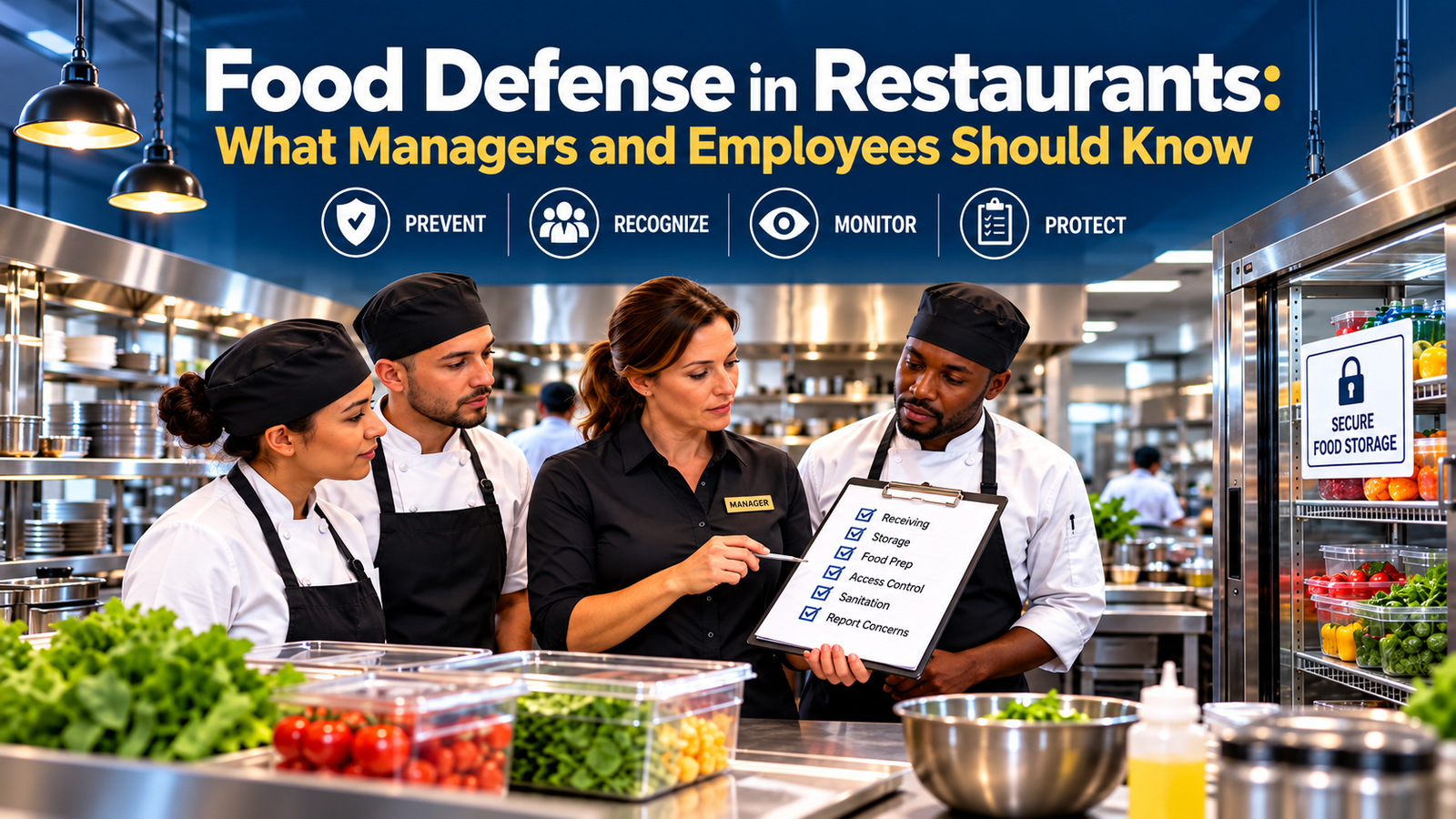
In restaurants, food defense is about preventing intentional food contamination or tampering, and deliberate actions that may endanger customers or interfere with the restaurant's operations.
Food safety identifies and controls accidental hazards (e.g. poor temperature control, cross-contamination) while food defense addresses intentional hazards. These risks can be minimized by restaurant managers and staff by controlling access, monitoring deliveries, securing ingredients, being vigilant and promptly reporting any concerns.
The FDA's Employees FIRST program provides the food worker at the front line a clear set of guidelines to follow: Check the food defense plan, check the work area, notice any unusual activity, secure the food and supplies, and report management when something doesn't seem right.
What Is Food Defense in Restaurants?
In restaurants, food defense is a process that involves reasonable measures to prevent intentional contamination or tampering of food. The objective is not like typical food safety.
In the field of food safety, the focus normally is on unintentional hazards. For instance, a worker might accidentally contaminate ready to eat food, or set the refrigerator temperature too high. Food defense is a different scenario: someone intentionally disrupts food, ingredients, packaging or a food-handling procedure. According to the FDA, food defense refers to activities designed to prevent food from being deliberately adulterated or tampered.
For restaurants, practical food defense can include:
- Controlling who enters kitchens, storage rooms, and other restricted areas.
- Securing ingredients and food products when employees are not using them.
- Checking deliveries and returned products for signs of tampering.
- Keeping unnecessary visitors away from food preparation areas.
- Reporting suspicious behavior or unexplained changes immediately.
- Training employees to recognize and report unusual situations.
A restaurant does not need complicated procedures for every possible scenario. Managers should create clear rules that employees can follow during normal shifts.
Food Safety vs. Food Defense: What Is the Difference?
Food safety and food defense are often confused by the managers, but the two are two different risks.
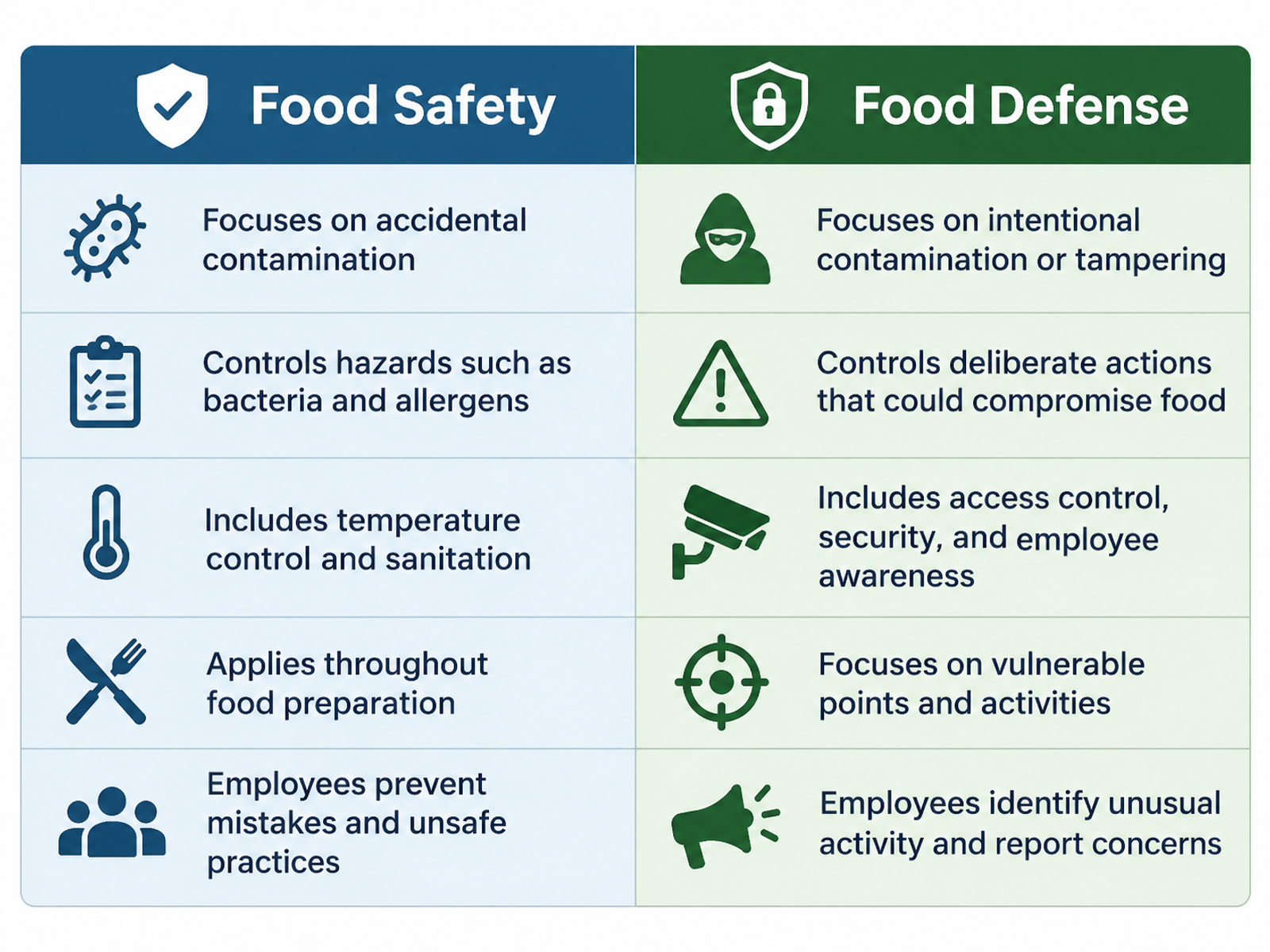
Both areas matter. A restaurant can follow good sanitation practices and still need procedures that address intentional tampering.
Why Food Defense Matters in Restaurants
Restaurants have to deal with many aspects of food before it can be delivered to a customer. They receive deliveries, store ingredients, prepare and cook food, assemble orders, and handle finished products before they reach the customer. Failure to apply basic controls can lead to opportunities for unauthorized use or tampering in each of the stages.
Another reason that food defense is important in restaurants is that restaurant workers are likely to be exposed to a variety of situations in a large, open area. There may be different areas of an operation where vendors, delivery drivers, contractors, customers and others will enter or move near the area. Clear access rules make it easier for employees to understand what areas they need to be authorized to access.
Key Food Defense Practices for Restaurant Managers
Restaurants and their managers have a crucial role to play in the protection of food against intentional contamination and tampering. Risks can be minimized during delivery, storage, preparation and service using simple controls. Managers should provide staff with clear protocols, restrict access to food areas, and ensure that all staff are aware of how to report any unusual activity.
1. Control Access to Food and Storage Areas
The managers must determine the staff who will be allowed to work in those areas where food is handled, such as kitchens, storage rooms, walk-ins, dry storage, and other areas. Access control is particularly important for restaurants that receive supplies or are working with contractors. Workers should be familiar with who can go inside the operation and where they can go.
2. Inspect Deliveries Before Accepting Them
All incoming food and supplies should be checked by employees prior to storage. Check for any damage to the package, odd seals, leaks, missing labels, broken containers or any changes that do not align with the expected condition of the product. Never let employees shrug off a package that comes from a regular supplier if they suspect something is amiss. Regular checks establish a pattern for employees to use each time they conduct them.
3. Secure Ingredients and Finished Food
Ingredients, supplies and completed products should be kept secure in restaurants when they are not being used. Basic food defense awareness is covered specifically by the FDA's Employees FIRST program that instructs workers to “secure” ingredients, supplies, and finished products.
4. Teach Employees to Recognize Unusual Activity
The changes are frequently detected earlier by employees than managers due to increased contact in the food preparation and service areas. The important message for employees is simple: if something seems unusual or out of place, report it. Employees are not responsible for determining whether someone intended to cause harm. Their role is to report the concern so management can investigate and decide what action to take.
What Should Employees Do If They Notice a Concern?
A clear reporting process makes food defense in restaurants easier to manage.
Employees should:
- Stop handling the questionable product, if it is safe to do so.
- Keep the product or affected area separate from normal food operations, following company procedures.
- Report the concern to a manager or supervisor immediately.
- Describe what you observed without making assumptions about anyone’s intent.
- Follow the restaurant’s food defense or incident response procedures.
Incidents should be recorded the manager should decide the action to be taken. Having a quick reporting process can ensure that employees don't avoid reporting concerns due to uncertainty about what to do.
How Managers Can Build a Food Defense Plan
The food defense procedures in a restaurant must reflect the actual restaurant operation. Managers should consider the locations where employees receive, store, prepare, hold, and serve food as a starting point. The requirements for facilities under the FDA's Intentional Adulteration Rule are to have a food defense plan in writing, a vulnerability assessment, a mitigation plan, monitoring plan, corrective actions, verification, training, and records. The FDA also has a Food Defense Plan Builder designed to document information on the food facility's vulnerability assessments, mitigation measures, monitoring, corrective action, and verification.
How Employee Training Supports Food Defense
A written procedure is only effective if employees understand what to do. Food defense should be included in both new-hire onboarding and refresher training so employees know how to follow company procedures, monitor their work areas, recognize unusual activity, secure food and supplies, and report concerns to management.
Train 321 provides online food safety and workplace compliance training for restaurant and hospitality teams.
A Simple Food Defense Checklist for Restaurant Teams
Managers can use this quick checklist during routine operations:
- Access: Can only authorized people enter food preparation and storage areas?
- Deliveries: Do employees inspect incoming products for damage or tampering?
- Storage: Do employees keep ingredients and finished food properly secured?
- Awareness: Do employees know what unusual activity looks like?
- Reporting: Does every employee know who to contact when something seems wrong?
- Training: Do managers provide food defense and food safety training as required?
- Records: Does the restaurant document required training, monitoring, and corrective actions?
Regularly reviewing these points can help managers identify gaps before they become larger problems.
Conclusion
Food defense begins in restaurants with basic steps that workers take daily. Managers need to be able to restrict access to food areas, check deliveries, ensure food is kept secure, keep an eye on unusual activity and have a clear mechanism to report concerns. Food defense cannot be a substitute for food safety. Rather, it is for a new kind of risk: intentional contamination and tampering. An important part of the responsibility is training, which ensures that the employees are aware of what to look for as well as what to do if something appears amiss.
Train 321 provides food safety, food manager, alcohol safety and other mandated employee training for restaurant and hospitality teams for restaurants in need of mandated employee training.