Cross-contamination in a restaurant occurs when bacteria, viruses, allergens or other germs are transferred from one food to another, from a surface to a food, from a dish to a utensil, or from one person to another. This can happen when raw meat comes into contact with food that is ready to eat, if raw chicken is handled on the same chopping board as salad or if a contaminated surface is touched and then the food is handled. Restaurants can minimize these issues by creating a separation between raw and ready-to-eat food, washing hands properly, cleaning and sanitizing equipment, storing food in a safe manner, and educating employees on good food-handling practices. Separation, cleaning, hand hygiene, and safe food preparation are all important elements to preventing food-borne illness, as outlined by both USDA and CDC guidance.
What Is Cross-Contamination in Restaurants?
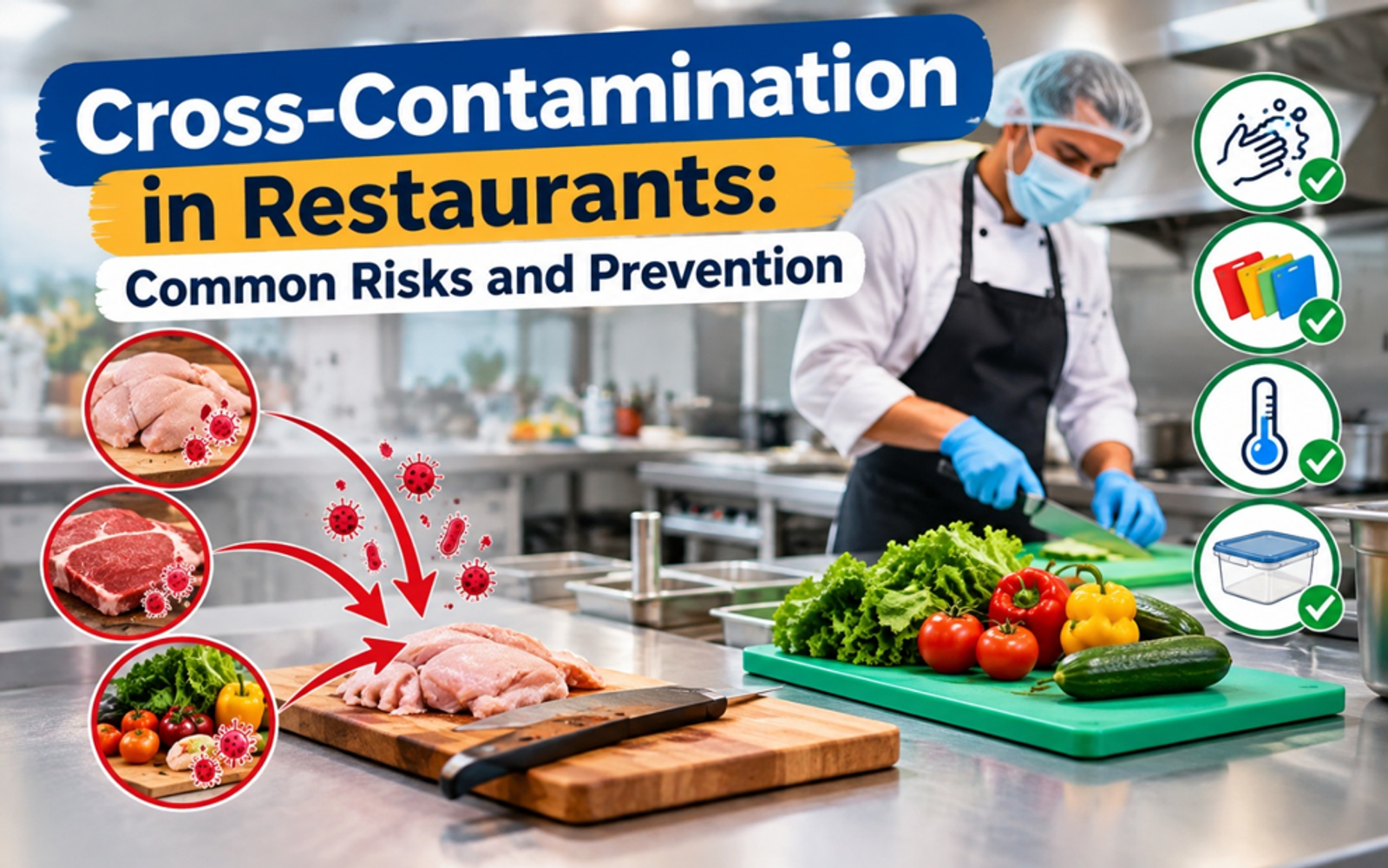
Cross-contamination in restaurants is the spread of harmful microorganisms or other contaminants from one source to another. The transfer can occur between foods, from equipment to food, from hands to food or from contaminated surfaces to utensils. For instance, a cook could chop up raw chicken on a cutting board and then chop up lettuce without washing the board in between. If the raw chicken comes into contact with the lettuce, the bacteria can be transferred.
Common Causes of Cross-Contamination in Restaurants
There are numerous ingredients and tools that are used at restaurants in each shift. If there are no procedures, then employees will be able to easily spread the contaminants from one area to another.
1. Raw Meat and Ready-to-Eat Foods
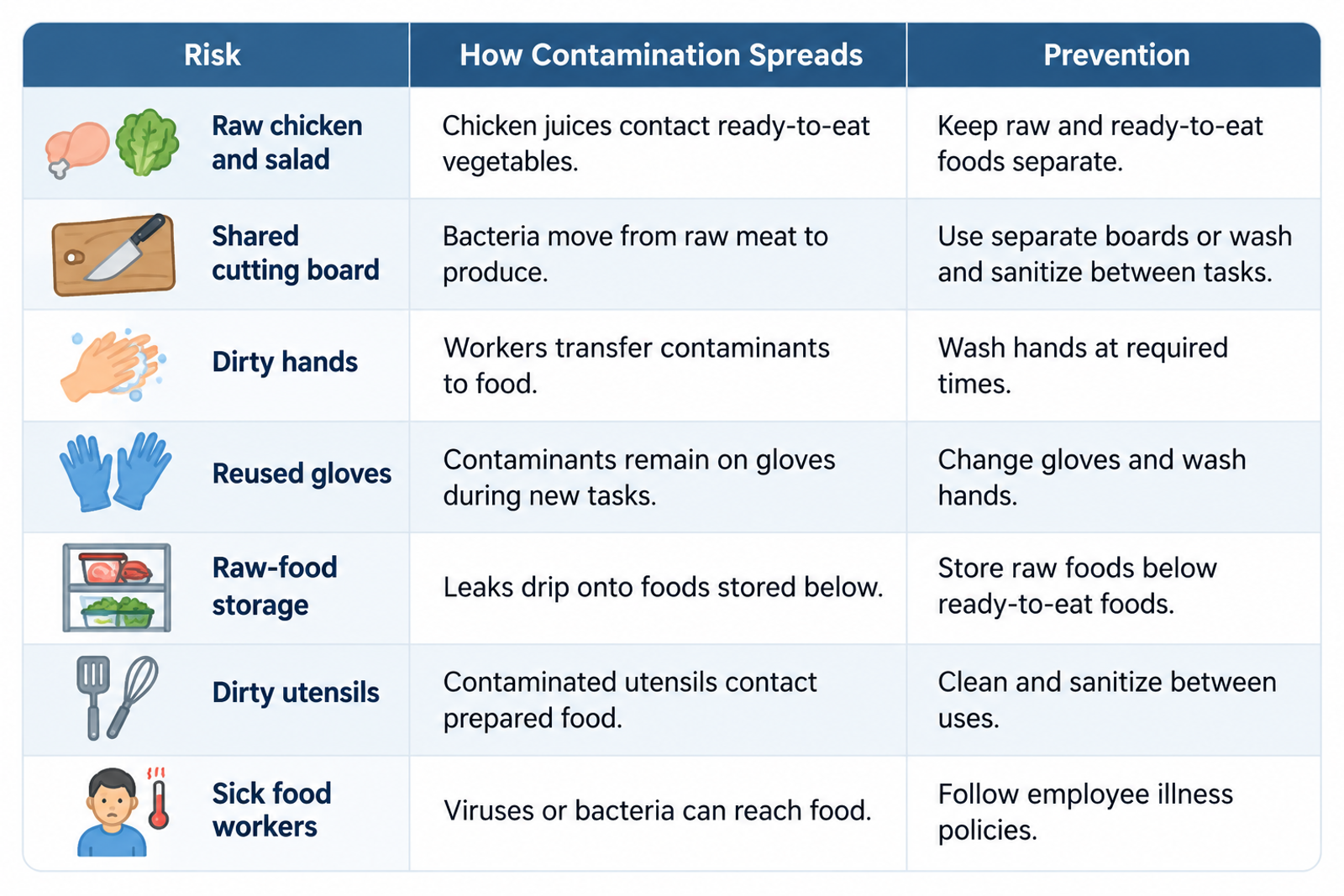
Raw chicken, beef, pork, seafood and eggs may contain dangerous microorganisms. Their juices can contaminate foods when they come into contact with cooked foods, vegetables, bread, sauces, and other ready-to-eat foods. Cooked chicken for instance can be contaminated with bacteria again when placed on the same plate as the raw chicken. According to the FDA guidance, raw and cooked food must be kept apart and separate plates and utensils used for raw and cooked foods.
2. Shared Cutting Boards and Knives
When employees use cutting boards and knives to prepare a variety of foods, without cleaning them between tasks, these items can spread contaminants. This risk can be minimized by having a separate cutting board for raw animal products and for fresh produce in the restaurant. USDA also urges washing cutting boards, dishes, countertops and other food-contact surfaces after food preparation with hot, soapy water.
3. Poor Handwashing
Hands can pick up dirt, raw food and other surfaces. In the studies reviewed, CDC research showed that only about one-third of restaurant workers were washing their hands when they should have been. The CDC also determined that workers were involved in multiple activities per hour that needed handwashing. Workers should wash their hands before handling food and after coming into contact with raw meat, poultry, seafood, eggs, dirty equipment, the face, or anything else that could be contaminated.
4. Improper Glove Use
Handwashing is not a substitute for gloves. If a worker uses the same gloves to handle a new food product after using gloves for raw meat or touching a dirty surface, the product may become contaminated. Employees should change gloves whenever transitioning from one task to another and when they become soiled or damaged. Additionally, one should wash hands before changing the gloves. CDC research revealed that some workers in restaurants were not always changing gloves or washing their hands between handling raw meat or poultry and ready-to-eat food.
5. Dirty Equipment and Food-Contact Surfaces
Excessive transferring of contaminants can occur by slicers, mixers, counters, containers, utensils, refrigerator handles and other equipment if employees do not clean them properly. Restaurants need to have specific cleaning and sanitation protocols for food contact surfaces. The FDA Food Code sets forth model food safety criteria for retail and food-service food safety operations but the food safety criteria adopted and enforced are at the discretion of the state and local authorities.
Common Cross-Contamination Risks in Restaurants
How to Prevent Cross-Contamination in Restaurants
In restaurants, it's essential to have the right food separation, handwashing, clean equipment and safe food storage practices, all of which are maintained and taught to the staff throughout the shift to prevent cross contamination.
Separate Raw and Ready-to-Eat Foods
Make sure there is a clean line between raw animal products and food that will be consumed raw by customers. Separate raw meat, poultry and seafood from ready-to-eat foods in your storage area. Have distinct preparation areas, if available. When cooking food, use different utensils and cutting boards for foods that will be cooked and for foods that will be eaten raw. This basic separation minimizes the chance of contaminants to transfer to food.
Wash Hands at the Right Times
Hand washing continues to be one of the most important measures to prevent food contamination. Staff should clean their hands with soap and water for 20 seconds. They should wash before preparing food and after doing activities that might make their hands dirty, such as handling uncooked meat, poultry or seafood, or touching their face, dirty equipment, or eggs. Make hand washing easy for managers – provide hand sinks and soap, and provide workers with a suitable way to dry their hands.
Clean and Sanitize Food-Contact Surfaces
Cleaning will remove food residue and dirt and sanitizing will reduce microorganisms on surfaces after cleaning. Restaurants should follow their approved procedures for cleaning and sanitizing cutting boards, preparation tables, knives, utensils, and other food-contact equipment. Cutting boards should also be replaced when they are worn and have deep grooves in them to facilitate adequate cleaning of the board.
Store Food in the Correct Order
Cross contamination in restaurants can also happen during food storage when raw items leak or drip on ready to eat food. Store raw foods in closed containers, and store raw foods away from raw foods that don't require any additional cooking. Inspect containers for leaks and clean up spills on a regular basis.
A Simple Restaurant Cross-Contamination Prevention Checklist
Managers can use this checklist during daily operations:
- Keep raw meat, poultry, seafood, and eggs away from ready-to-eat food.
- Use clean and properly sanitized cutting boards, knives, and utensils.
- Wash hands before food preparation and after contamination risks.
- Change gloves when switching tasks or when gloves become contaminated.
- Store raw foods so their juices cannot drip onto other foods.
- Clean and sanitize food-contact surfaces according to established procedures.
- Keep sick employees away from food-handling duties when required.
- Train employees on food safety procedures and monitor their daily practices.
- Document required training and keep employee certificates organized.
- Review procedures regularly and update them when requirements change.
How Food Safety Training Can Help Restaurant Teams
Preventing cross-contamination in restaurants requires more than keeping cleaning supplies in the kitchen. Employees need to know how contamination spreads and how to prevent it during everyday food preparation. Train 321 provides online food safety training for restaurant and hospitality teams, including food handler and food manager courses. The training helps employees understand proper food handling, hygiene, separation, and other basic safety practices. Its broader catalog also includes state-specific courses and workplace compliance training. Train 321 reports more than 50,000 certificates issued and 5,000+ locations trained, giving restaurant operators a practical way to organize employee training.
Why Choose Train 321 for Food Safety Training?
- Online access: Employees can complete training from a phone or computer without attending a traditional classroom session.
- Food safety courses: Training covers essential food-handling practices that employees use during preparation, storage, and service.
- Manager training: Food manager courses can help supervisors build stronger knowledge of food safety responsibilities and procedures.
- State-specific options: Restaurants can find courses designed for specific states where local training or certification requirements apply.
- Easy training management: Online courses and certificates make it easier for managers to assign training and keep employee records organized.
Conclusion
Cross-contamination in restaurants can occur through food, hands, gloves, utensils, cutting boards, equipment, storage areas, and sick employees. Restaurants can lower these risks by separating raw and ready-to-eat foods, washing hands correctly, changing gloves between tasks, cleaning and sanitizing surfaces, storing food safely, and keeping sick employees away from food handling when required. Regular employee training supports these practices because workers need clear instructions they can follow during real restaurant shifts. For restaurants that need simple online compliance training, Train 321 offers food safety, food manager, alcohol safety, and workplace courses. Its online training helps managers organize employee training and certificates in one place.