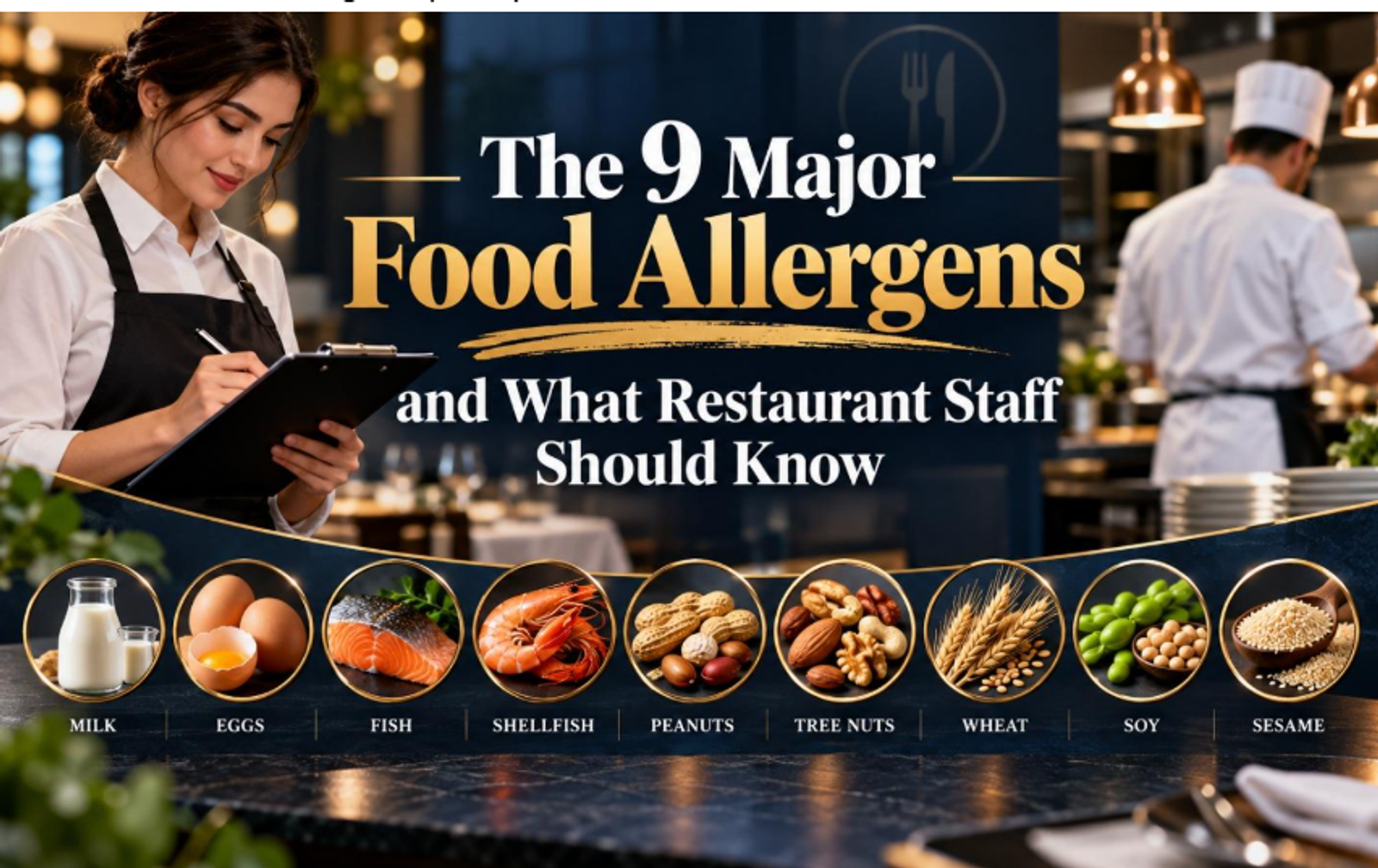
A dining experience can quickly become a serious situation when a guest has a food allergy. Food handlers must be familiar with the 9 major food allergens, steps to take when a guest has a food allergy, understand how to prevent cross contact, and which common foods have these allergens. Milk, Eggs, Fish, Crustacean shellfish, Tree nuts, Peanuts, Wheat, Soybeans and Sesame are the 9 major food allergens recognized by the U.S. Food and Drug Administration (FDA). On January 1, 2023 the U.S. federal government designated sesame as its ninth major food allergen. A food allergy occurs when a person’s immune system reacts negatively to the proteins found in a certain food. Knowing the 9 major food allergens is the beginning. Food handlers must also be familiar with the food menu and ingredients in each dish so they can answer a guest’s questions about food allergens. Restaurant staff should communicate clearly, follow kitchen procedures and protocols, and never assume a small amount of an allergen or a dish is safe without being completely sure.
What Are the 9 Major Food Allergens?
U.S. federal law identifies 9 major food allergens that are responsible for most of the serious food allergic reactions in the U.S.
Major allergen
Common restaurant examples
Milk
Cheese, butter, cream, milk, ice cream, creamy sauces
Eggs
Mayonnaise, pasta, baked goods, sauces, egg washes
Fish
Salmon, tuna, cod, fish sauces
Crustacean shellfish
Shrimp, crab, lobster, crawfish
Tree nuts
Almonds, walnuts, pecans, cashews, pistachios
Peanuts
Peanut butter, sauces, desserts, toppings
Wheat
Bread, pasta, tortillas, baked goods, breading
Soybeans
Soy sauce, tofu, some dressings, processed foods
Sesame
Tahini, sesame oil, hummus, buns, seasoning mixes
Please note that these allergens may not always be visibly present but they can be used as ingredients for sauces, marinades, dressings, desserts, spice blends and prepared ingredients. Restaurant staff should always double check ingredients and recipes when notified of a food allergy and alert the kitchen staff.
1. Milk
Milk can be found in common products such as cheese, cream, butter, yogurt, baked goods and ice cream. Ingredients such as casein and whey caseinate can also be classified as milk products. Restaurant staff should never assume a product is milk free without checking the ingredients and following your restaurant's allergen policies.
2. Eggs
Breakfast foods, mayonnaise, baked goods, pasta, dressings, processed foods, desserts and sauces are all items which are made with eggs. Some dishes may include egg washes, egg yolk and egg whites which carry the proteins associated with food allergies.
3. Fish
Fish allergies include salmon, tuna, cod, tilapia, mahi-mahi, halibut, trout, bass and various other types of finned fish. Worcestershire sauce, caesar dressing, fish sauce and some broths and soups all contain fish. Guests may be allergic to all fish or one specific type of fish so its important you know which dishes have fish ingredients.
4. Crustacean Shellfish
Common crustacean shellfish include shrimp, crab, lobster, crawfish and prawns. This allergen may be a cross contact risk in kitchens where multiple seafood items are being prepared. Be mindful of equipment such as grills, fryers, pans, utensils and preparation surfaces. When possible, the risk can be minimized by using separate preparation equipment. If separate equipment is not available, staff should follow the cleaning and sanitation procedures of the restaurant before they prepare the meal for a customer. Removing shellfish from a finished dish will not make it allergen free as fish proteins may still be present which are not visible.
5. Tree Nuts
Tree nuts are almonds, walnuts, pecans, cashews, pistachios, hazelnuts, brazil nuts, macadamia nuts and other nuts. These can be added to salads, desserts, sauces, toppings, baked goods and specialty dishes in restaurants. Don't assume that a food is safe if the nuts are not visible on the dish. Tree nut proteins can be present without being visible in the ingredients. Cross-contact can easily happen with tree nuts because of shared utensils, cutting boards, blenders, food processors, and baking equipment. Also keep in mind that tree nuts and peanuts are different allergens.
6. Peanuts
Peanuts may be found in peanut butter, sauces, desserts, candy, snack foods and used in some Asian and African dishes and beverages. Cross contact may occur with peanut products during the food preparation process with kitchen equipment or preparation surfaces. If a guest notifies the staff that she is allergic to peanuts, the staff member should inform the kitchen, and then follow the restaurant's allergy procedure. Peanuts are different from tree nuts as they are categorized as a legume.
7. Wheat
Wheat is present in bread, pasta, baked goods, crackers, cereals, tortillas, flour based sauces, breading, gravies and other foods. Processed foods may also contain wheat, so always check the labels. Assuming something is wheat free just because it's not a baked good is not a safe assumption, always check with the chef to verify the recipe and or ingredient list. During food preparation flour can easily spread, cross contact can occur so equipment and surfaces must be cleaned properly.
8. Soybeans
Soybeans may be found in tofu, tempeh, soy sauce, soy milk, miso, soy protein, soy flour, some marinades, dressings, textured vegetable protein (TVP), some forms of soy lecithin, processed foods and other prepared food products. Because soy products are often found in many processed foods, it's imperative that employees not assume a dish is soy free. Up to date ingredient lists should be available on all dishes to employees so they help the guest make safe food choices.
9. Sesame
Sesame is the ninth U.S. federally listed major food allergen. It can be found as an ingredient in hummus, buns and sauces, and in tahini, sesame oil and seasoning mixtures. Special attention needs to be paid to breads, sauces and prepared foods, as sesame may not always be evident from the name of the menu item.
Why Restaurant Staff Need Allergen Training
Restaurant staff should be familiar with the 9 major food allergens so that they can recognize any potential allergen risks. Knowing the 9 food allergens is the first step, restaurants should have clear procedures for addressing food allergy requests. CDC research identified a lack of food allergy training in restaurants, and revealed that over half of the restaurant employees surveyed had not been trained in food allergies. Restaurants should incorporate food allergy awareness training into their procedures as well as serving guests with food allergies.
Everyone involved in the preparing, handling and serving of food should be able to identify the 9 major food allergens, how to accommodate guests with food allergies, and how to prevent allergen cross contact.
1. Listen Carefully to the Customer
It is important the restaurant staff know the proper questions to ask when a food allergy is reported and the next steps to follow. Listen carefully, confirm the specific allergen and make sure you understand what the customer is telling you. For example, if a guest says “I can't eat nuts”, don't just assume they simply don't just like nuts. Take the time to ask which nuts specifically they are allergic to and communicate the allergy clearly to the kitchen. If you are unsure, always check with your manager and the kitchen to make sure you are providing the guest with the most accurate information.
2. Check Ingredients Instead of Guessing
You should never assume a menu item is allergen free unless you are certain of its ingredients and how it is prepared. Restaurant staff should be knowledgeable about menu items so they can answer guest questions when a food allergy is reported. If uncertain on whether a certain dish is allergen free, be honest with the guest and let them know you will check with the kitchen. Staff should confirm the specific food allergy with the guest and clearly communicate the information to the kitchen. This allows the kitchen to recheck ingredients, preparation steps and prevent any cross contact.
3. Prevent Cross-Contact
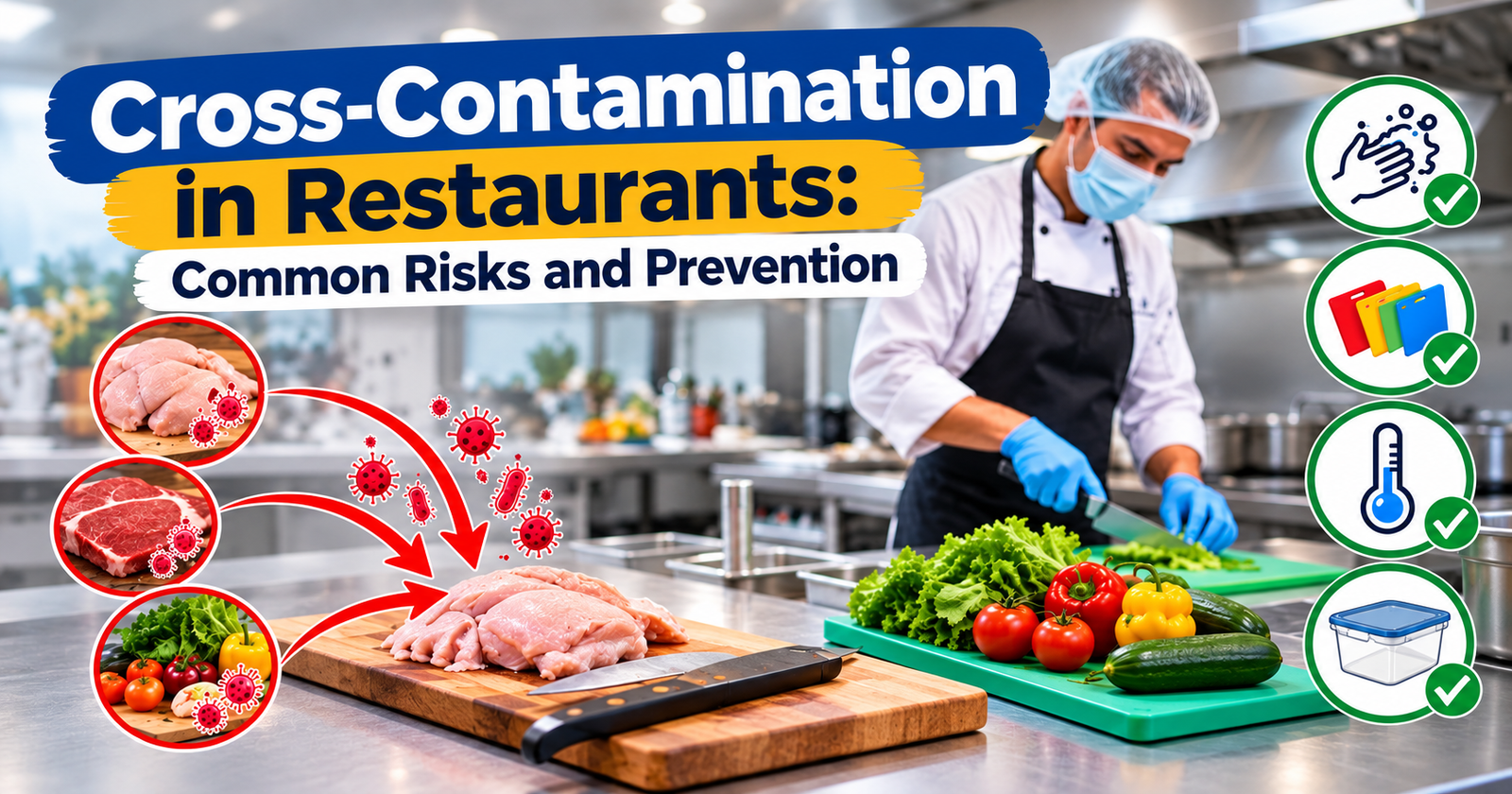
Cross-contact happens when an allergen is unintentionally transferred from one surface, equipment or food on to another. For example, if a knife is used to cut fish and then used to cut another food without properly cleaning it, fish proteins may be transferred to that food and create a risk for someone with a fish allergy.
Restaurants can reduce cross-contact by:
- Hand washing and changing gloves before starting a new task.
- Properly washing hands thoroughly and changing gloves before preparing a food allergy order.
- Cleaning and disinfecting preparation surfaces, utensils and equipment.
- Using separate utensils or equipment for allergy orders when possible.
- Maintaining allergens separated and controlled during food preparation
- Clearly communicating food allergy orders to kitchen and restaurant personnel
CDC highly recommends using separate equipment & preparation areas when possible when handling food allergies.
What Should Staff Do If a Customer Has an Allergic Reaction?
A suspected allergic reaction should always be taken seriously. Restaurant staff should respond promptly and follow the restaurant's emergency procedures. Food allergy symptoms can range from mild to severe and in some instances life threatening. Allergic reactions are unpredictable and can progress quickly, staff should never ignore or undermine a guest’s symptoms.
Staff guidelines when responding to allergic reaction emergencies:
- Alert a manager or the person in charge immediately.
- Follow the restaurant's emergency response procedures.
- Call emergency medical services if the guest is experiencing serious or life threatening allergic reaction signs.
- Stay with the guest and provide reasonable assistance while help arrives.
- Never tell a guest to wait and see if their symptoms improve.
Knowing the 9 food allergens is not enough, staff should be trained on how to respond to an allergic reaction situation. The staff should know the restaurants emergency procedures and their in case of an emergency.
Restaurants should train employees on how to respond in an allergic reaction emergency, not just on identifying the 9 food allergens. CDC research shows that many restaurant training programs fail to address the steps that should be taken in case of a food allergy emergency.
A Simple Food Allergy Checklist for Restaurant Teams
Managers can use a short checklist to reinforce good practices:
Staff responsibility
What to do
Know the allergens
Learn the 9 major food allergens and common sources
Check ingredients
Use current recipes and ingredient information
Communicate
Inform kitchen staff about allergy requests clearly
Prevent cross-contact
Clean, sanitize, and use separate equipment when handling a food allergy
Never guess
Inform customers when you cannot verify an ingredient
Handle reactions
Follow emergency procedures and seek medical help when needed
Food allergy procedures should also match the restaurant's local requirements. The FDA Food Code serves as a model for state and local jurisdictions, so requirements can vary depending on where a restaurant operates. The 2022 Food Code added sesame to its list of major food allergens and calls for food allergy awareness in employee food safety training programs in jurisdictions that adopt those provisions.
Train Restaurant Staff on Food Allergy Safety
Food allergen policies and procedures should be easy to understand and part of every restaurant's training program.
Train 321 provides online food safety training and food manager certification courses for restaurant workers and managers. Training can be completed online from a computer or mobile device, anytime and anywhere. Train 321 helps you standardize training to keep employees on the same page across all departments and locations. The learning management system (LMS) helps you keep track of course completions, certificates and training records. It is recommended management review internal food allergy training consistently and update new menu items and ingredient lists.
Conclusion
The 9 major food allergens include milk, eggs, fish, crustacean shellfish, tree nuts, peanuts, wheat, soybeans and sesame. All restaurant workers should be familiar with the nine major food allergens and understand the importance of making sure a guest with a food allergy is served a food allergen free dish when alerted. Restaurants should make sure that staff is knowledgeable about menu items and their ingredients. Employees should also understand how to prevent cross contact and follow the proper cleaning and sanitizing procedures when preparing food for guests with food allergies. Never assume that a dish is allergen-free. Familiarize yourself with the menu, know which ingredients are used in each dish, and follow your restaurant’s food allergy procedures when preparing or serving food to a guest with a food allergy.