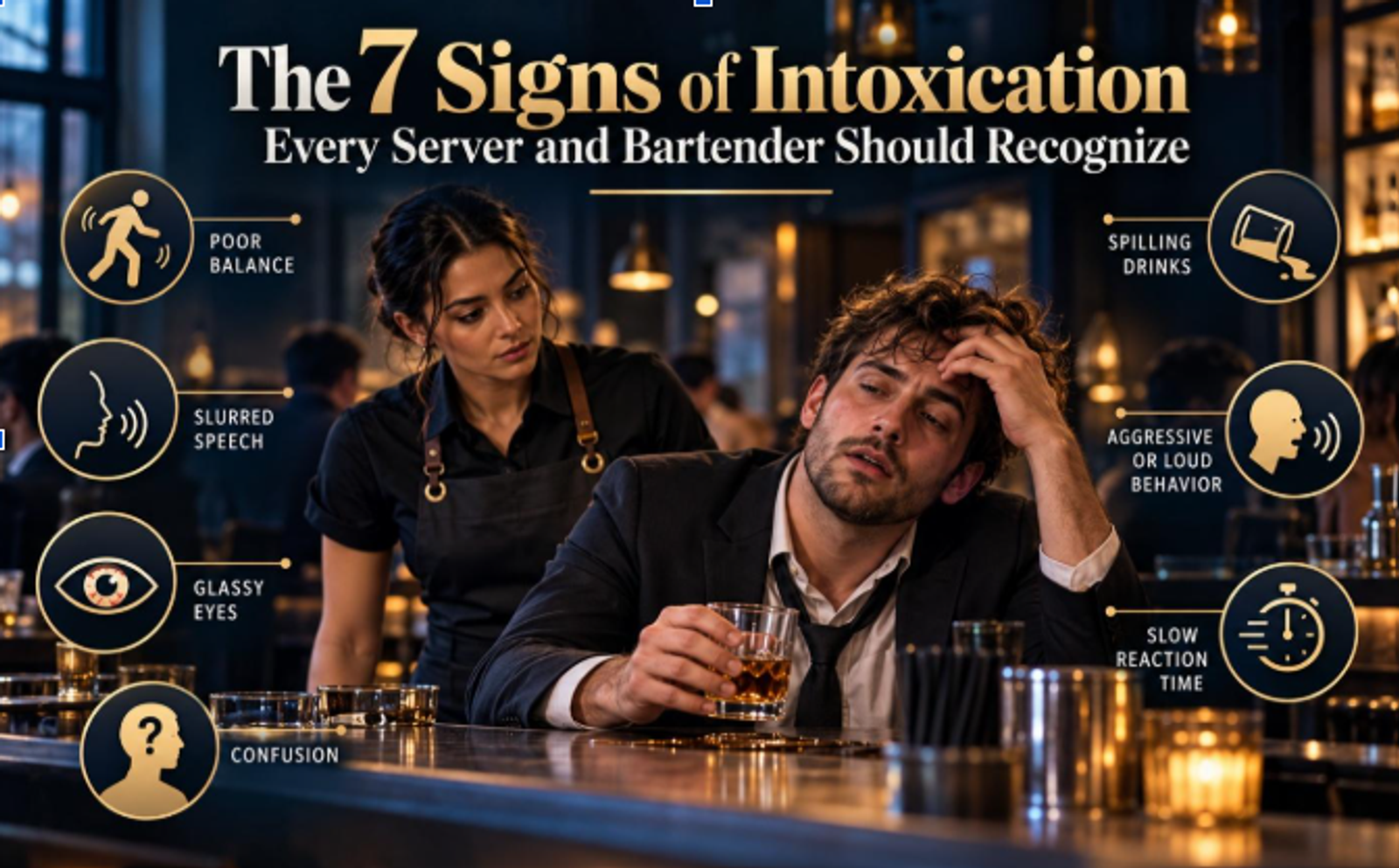
Servers and bartenders should be able to recognize the signs of intoxication before an alcohol related situation escalates. It is not necessary for a guest to display all 7 warning signs before the staff start to notice. Common warning signs include slurred speech, poor balance, unusual behavior, slow reactions and memory loss. These signs can help staff make more adequate decisions when serving and selling alcohol to guests. There are no definitive signs that someone is intoxicated; these are just guidelines. As servers and bartenders it is important you follow all policies and procedures established by your place of work and abide by all state alcohol laws and regulations.
What Are the Signs of Intoxication?
Common symptoms of intoxication include changes in speech, coordination, behavior, attention, reaction time, appearance and memory.
Signs
What a server may notice
Slurred or unusual speech
Words sound unclear, slow, or difficult to understand
Poor coordination
Stumbling, dropping items, or difficulty handling objects
Changes in behavior
Unusual friendliness, aggression, loudness, or emotional changes
Poor judgment
Risky decisions or difficulty following normal instructions
Slow reactions
Delayed responses to questions or events
Memory and attention problems
Repeating questions, forgetting conversations, or losing focus
Changes in appearance
Glassy or unfocused eyes, flushed appearance, or other noticeable changes
Alcohol affects people differently, so servers should not rely on a fixed number of drinks to decide whether someone is intoxicated. How much and how quickly someone drinks can affect impairment, and factors such as food, medications, tolerance, and individual sensitivity will also play a role in how alcohol affects you.
1. Slurred or Unclear Speech
Slurred speech is a more obvious sign of intoxication. A guest might begin to speak more slowly, mispronounce words, repeat words or struggle to come up with clear sentences, as they consume more alcohol. For example, if a person was speaking clearly when they first arrived, they might start mumbling or slurring their words once they have consumed alcohol. Alcohol affects parts of the brain that are responsible for speech and clear communication. However, it’s important for staff to pay attention to a guest’s normal speech and mannerisms. Slurred or impaired speech does not always mean that a guest is under the influence of alcohol.
2. Poor Balance and Coordination
Poor balance and coordination are also signs of intoxication. A person who is intoxicated may have trouble walking in a straight line or standing without wobbling. They may stumble, bump into things, drop items, have trouble grabbing things, or have difficulty sitting down or standing up normally. As alcohol levels rise, balance and motor coordination can decrease. Any changes that are noteworthy should be taken seriously by the server as they can contribute to the risk of falls and other injury. Staff should also refrain from pressuring the guest to continue drinking if they are not presenting signs of intoxication as alcohol affects everyone differently.
3. Unusual or Sudden Behavior
Behavioral changes are also indicators of intoxication. A calm guest may suddenly become excessively talkative, friendly, argumentative, emotional, or aggressive. There may be some guests who lose their social inhibitions and act in manners that may be considered inappropriate. Some might become overly relaxed or careless. Alcohol affects the frontal lobe of the brain, which can lower a person’s inhibitions and affect their judgment. Excessive amounts of alcohol can also result in impulsive behavior and even aggression. Servers should stay observant and pay attention to changes in a guest’s behavior and mannerisms, as these can provide insight into how alcohol may be affecting them
4. Poor Judgment and Risky Decisions
Alcohol can affect judgment and decision-making before a person shows signs of intoxication. A guest may make poor choices, take risks, or not realize when something is unsafe. As a server, this is when you need to pay closer attention to your guest. Offer food and water while they are drinking to help slow down the absorption of alcohol. Be aware of any changes in their behavior and remember that alcohol can affect their judgment and decision-making.
5. Slow Reactions and Delayed Responses
Alcohol is a depressant which slows down reaction time. As a person drinks more alcohol, their reaction time can become slower, making it harder to respond quickly to what is happening around them. Examples would be a guest taking a long time to respond to a question, slow reactions to moving objects or delayed responses. Alcohol impairs reaction time, attention, judgment and coordination. Not all slow responses are signs of intoxication, so it's important for servers to pay close attention and follow company procedures and protocols and seek assistance from their management team when unsure.
6. Memory and Attention Problems
Alcohol disrupts the way the brain processes information, affecting memory and attention. The ability to focus can decrease as alcohol consumption increases. For example, maintaining a conversation, listening attentively or recalling what just transpired becomes blurred when drinking alcohol. A big intake of alcohol can also cause blackouts, leaving the person unable to recall an entire event or unable to recall what transpired. Repeat confusion mixed with other signs may be indicators that a person is intoxicated. If a guest becomes very confused, has trouble staying conscious, or is showing other concerning signs, the situation may have become more serious. At this point, it’s important to get your manager involved right away.
7. Noticeable Changes in Appearance or Eyes
Servers may also notice physical changes in a guest's appearance. These can include glassy or unfocused eyes, a flushed appearance, or a general change from how the guest looked earlier. However, appearance alone cannot determine intoxication. Lighting, tiredness, allergies, medications, health conditions, and other factors can affect a person's eyes or appearance. For that reason, staff should use appearance as one observation rather than treating it as proof. Look for several signs and compare the guest's current behavior with their previous behavior.
What Should a Server Do When a Guest Shows Signs of Intoxication?
Being able to identify signs of intoxication is just the beginning. Servers must also adhere to their employer's policies as well as applicable alcohol-service requirements.
A practical approach includes:
- STOP and Assess the situation. Evaluate all of the guest’s actions and interactions rather than just one sign.
- Keep the team informed. Report any concerning behavior or situations to your manager or person in charge as well as coworkers so that everyone is on the same page to the best course of action.
- Adhere to your alcohol service policy. Follow the policies and procedures your place of work has set in place.
- Avoid serving an intoxicated person. If they show signs of intoxication and are requesting another drink, get your manager involved and offer water, food or other alternatives to the guest.
- Assist in keeping the environment safe. Observe the guest and call for management and/or emergency assistance when necessary.
There are some laws and regulations at the state level and/or employer level that can vary from place to place; servers should get the alcohol-service training required in their state and/or work place.
When Signs Become an Emergency
High levels of intoxication can lead to an alcohol overdose and can be life-threatening. Symptoms include problems staying awake, not waking up, vomiting, seizures, irregular breathing, clammy skin, low body temperature, and unresponsiveness. Never assume the person is asleep and they can "sleep it off. NIAAA cautions that after someone has passed out, they may choke on their own vomit or suffer from severe breathing issues. If you think that someone has overdosed on alcohol, call emergency services and follow the emergency procedures outlined in your workplace. Coffee, cold showers, or walking will not sober someone up. These methods do not remove alcohol from the body or reduce its effects. The body needs time to process the alcohol.
Why Alcohol Safety Training Matters for Servers and Bartenders
Learning to recognize the signs of intoxication and understanding how alcohol affects the body can help servers in preventing situations involving alcohol to escalate. The more informed servers and establishments are about safe alcohol serving and selling practices, the better prepared they will be to make good decisions. Training helps establishments and their staff follow the same safe alcohol serving practices and reinforces the basics, such as checking identification and avoiding overpouring.
Train 321 Online Compliance Training is designed for restaurant, hospitality, and service teams. The Alcohol Safety course covers alcohol laws and liability, ways alcohol affects the body, checking identification, and refusing alcohol sales when necessary. Requirements can vary by state, so businesses should make sure the training meets the requirements for their location.
Conclusion
The 7 signs of intoxication can help servers and bartenders recognize when a person is intoxicated. These warning signs can include slurred speech, poor coordination, unusual behavior, poor judgment, slow reaction times, memory problems and noticeable physical changes.
It is important that employees do not make a decision based on just one sign. They should consider the guest’s overall behavior, appearance and actions while following their establishment’s procedures and state laws for the responsible sale and service of alcohol.
Employees should also be able to recognize when alcohol service needs to be stopped or slowed down and the necessary steps to take in case of a medical emergency.
Train 321 also offers responsible alcohol training for multiple states, including Responsible Beverage Service training in California and Responsible Vendor training in Florida. Courses are available online and can be completed from a phone or computer, allowing employees to complete their required training anytime and anywhere.